A three-sided platform architecture build is fundamentally different from building a traditional software product. Most software products serve one type of user. A two-sided marketplace is architecturally more expensive than a single-user product. A three-sided platform is more expensive still because the data model has to satisfy three distinct role perspectives simultaneously. The mistake of designing it for only two sides often becomes apparent when the third side needs to be built on top of a schema that was never designed to support it. This is why a successful three-sided platform architecture build requires long-term planning from the very beginning.
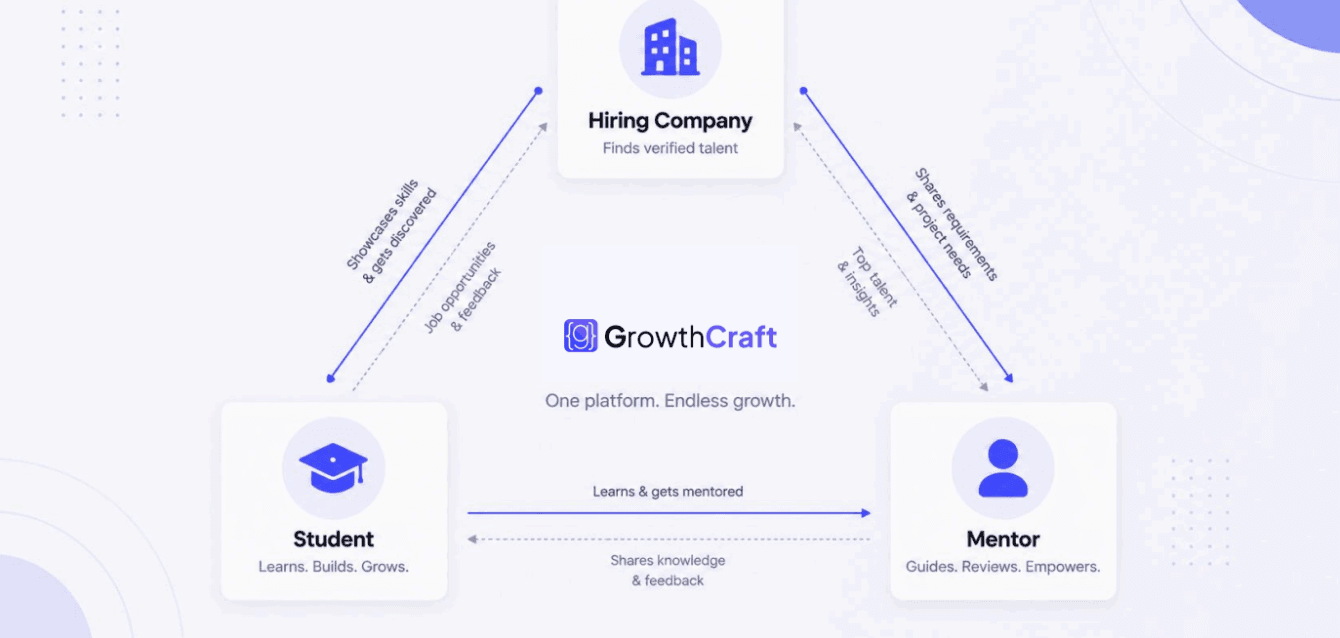
GrowthCraft has three user types. Students receive project briefs, submit deliverables, get mentor feedback, and build portfolios. Mentors see a review queue, submit feedback against structured rubrics, and track their student workload. Hiring companies browse verified student portfolios, filter by skill and track record, and contact candidates directly. Each type has a different dashboard, different success metrics, and different views of the same underlying data. Designing these experiences together was a core part of the three-sided platform architecture build, ensuring that every stakeholder could interact with shared data through workflows tailored to their needs.
The data model challenge: one object, three perspectives
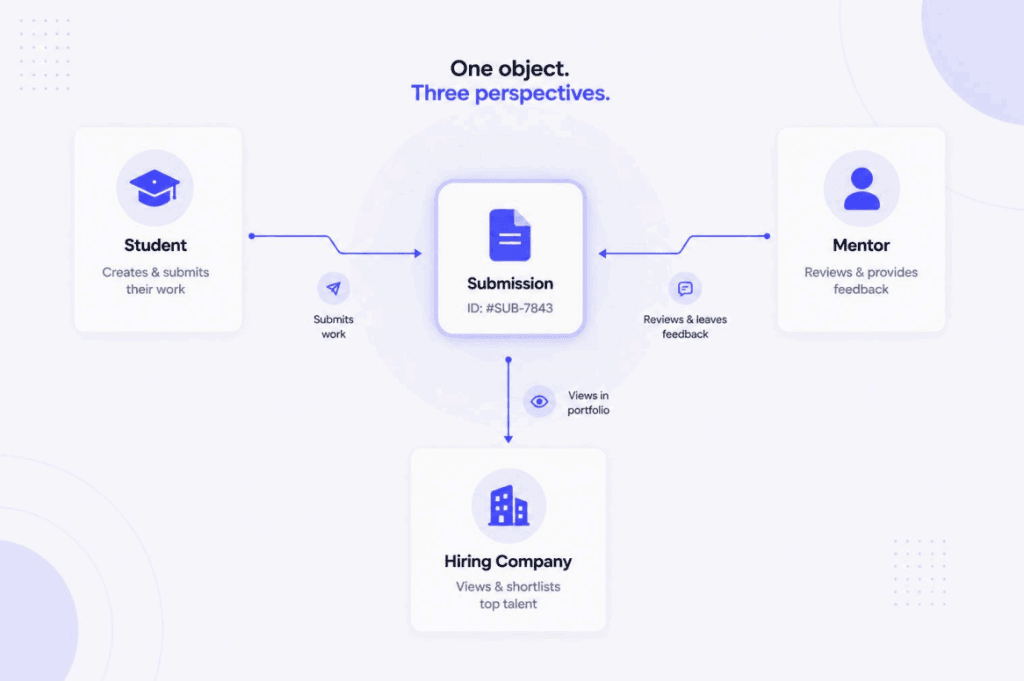
The central technical challenge in a three-sided platform is that the same data means different things to different users. The “submission” object in GrowthCraft is the clearest example. To a student, a submission is work they have produced and are waiting for feedback on. To a mentor, a submission is an item in their review queue with a 48-hour response SLA. To a hiring company, a submission is portfolio evidence, a verified demonstration of a candidate’s ability to do a specific type of work.
This is the same database row, accessed by three different user types, with three different interfaces over it. If you design the schema for the student first and add mentor and company views later, you get an object that serves the student well and the other two poorly. The submission schema has to be designed for all three perspectives from week one, even if the UI for two of the three ships later.
MVP sequencing: production before consumption
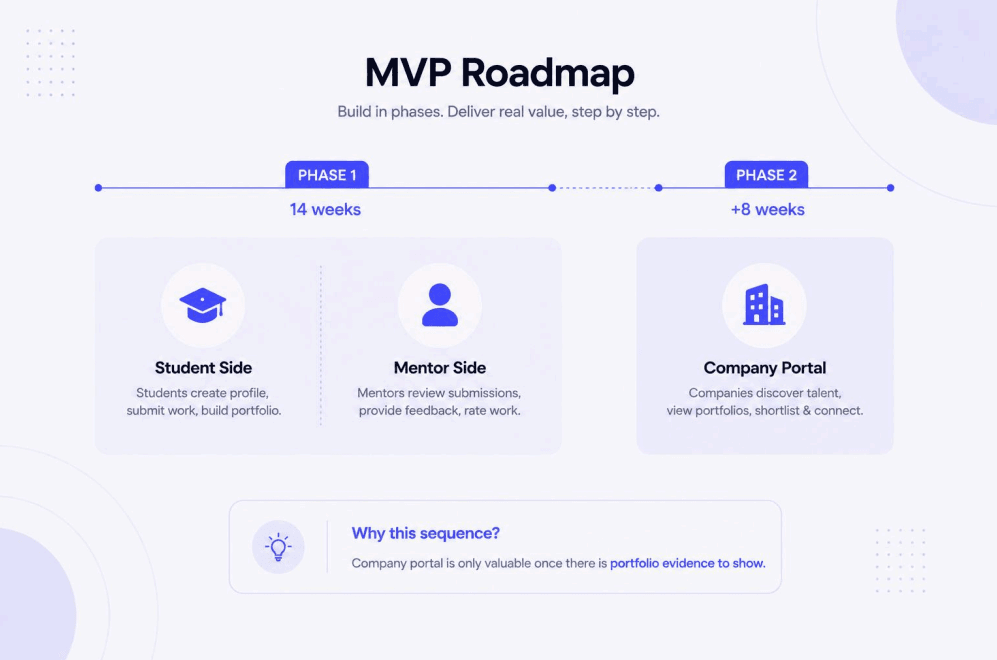
We shipped GrowthCraft v1 in 14 weeks with student and mentor functionality only. The hiring company portal was v2, launched eight weeks later. This sequencing was a deliberate part of the three-sided platform architecture build. The company portal is only valuable once there is verified portfolio work to show. Building the consumption side before the production side is a classic marketplace mistake, you create an empty shelf. This sequencing follows principles discussed in Andreessen Horowitz’s marketplace strategy. Students producing work and mentors reviewing it generate the portfolio evidence that hiring companies need. The company portal simply consumes that verified work.
By the time the company portal launched, GrowthCraft had 40 students with multiple reviewed project deliverables each. The companies browsing the portal had real work to evaluate. Launch timing determined whether the company portal was a working product or an empty promise.
Operational complexity: mentor response time is the lever
The critical operational variable on GrowthCraft is mentor response time. Students who wait more than three days for feedback complete their project tracks at one-third the rate of students who receive feedback within 24 hours. This is not a soft preference, it is a product survival metric. A platform where students do not complete tracks does not produce portfolio evidence, which means no value for hiring companies, which means no revenue from the company side.
GrowthCraft has automated nudges that fire if a mentor has not responded to a submission within 24 hours. At 36 hours, the submission is offered to a backup mentor from the same track. At 48 hours, a platform admin is notified. This operational logic is part of the engineering build, not an operations team afterthought.
What generalises
The sequencing principle build value-production sides first, then build value-consumption sides once there is value to consume, applies to any three-sided or multi-sided platform. Likewise, a successful three-sided platform architecture build depends on designing the data model for all user types from day one, even if their interfaces are released sequentially. This approach helps products with multiple stakeholders scale without requiring costly architectural redesigns as new user groups are introduced
FAQ
Does this architecture work for other three-sided platforms?
Yes, the sequencing principle and the data model approach generalize. We have applied them to other multi-stakeholder products.
How long did the full three-sided build take?
14 weeks for v1 (students + mentors), plus 8 weeks for the company portal = 22 weeks total. Engineering Pod engagement throughout.
Can SynthWeb build similar platforms?
Yes, Engineering Pod engagement, scoped after a discovery phase. See /engineering-pods.
Also Read : What Investors Actually Look for in Your Engineering Velocity Before a Series A