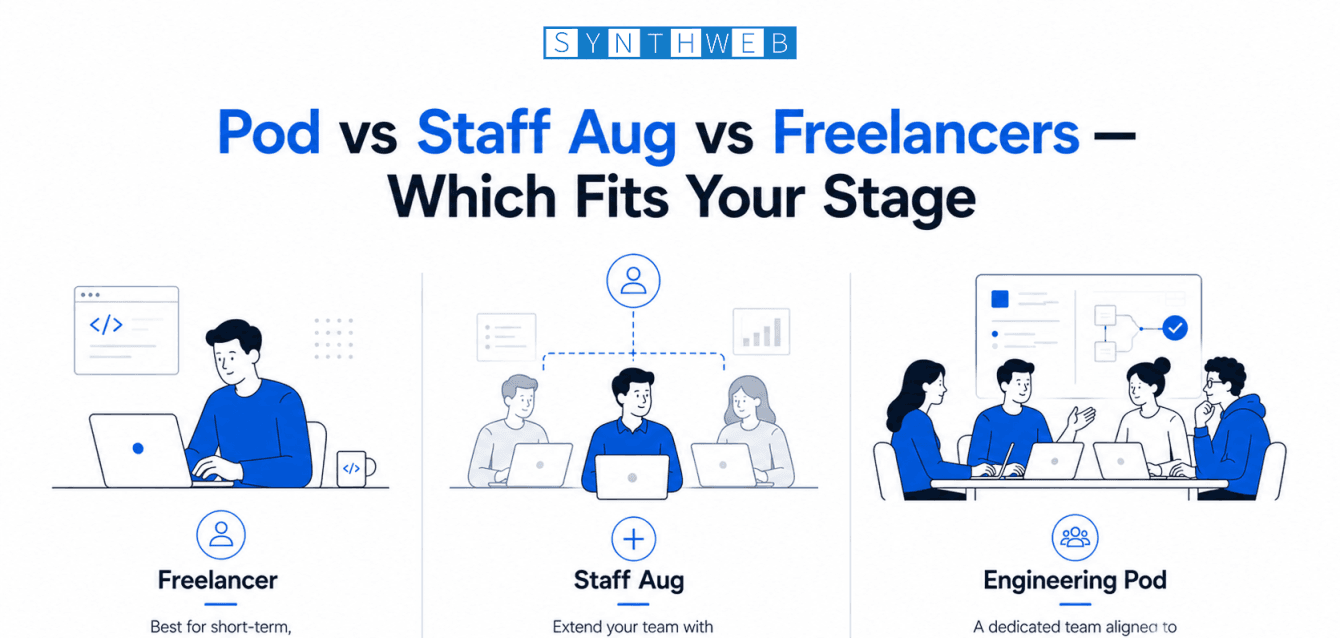
Engineering pod vs staff augmentation is one of the most common comparisons startup founders make when deciding how to scale engineering capacity. Add freelancers into the mix, and the decision becomes even more confusing. Three engagement models dominate the way funded startups buy engineering capacity in 2026: dedicated teams, embedded engineers, and freelancers. The marketing copy from each provider deliberately blurs the differences, leaving founders comparing apples-to-oranges price quotes and ramp-time promises. This post draws the line between the three models honestly and tells you which one fits your stage.
Disclosure first: SynthWeb sells engineering pods. The opinion below is informed by that, but the comparison is honest: pods are not the right answer for every situation, and we tell prospects so when they are not.
Comparing Startup Engineering Engagement Models
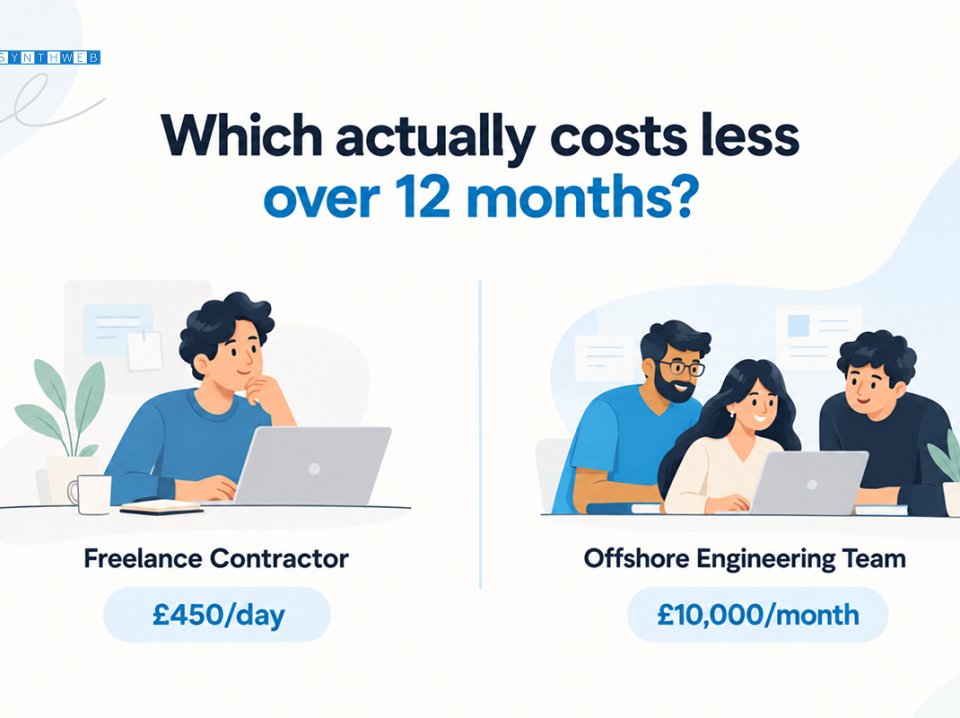
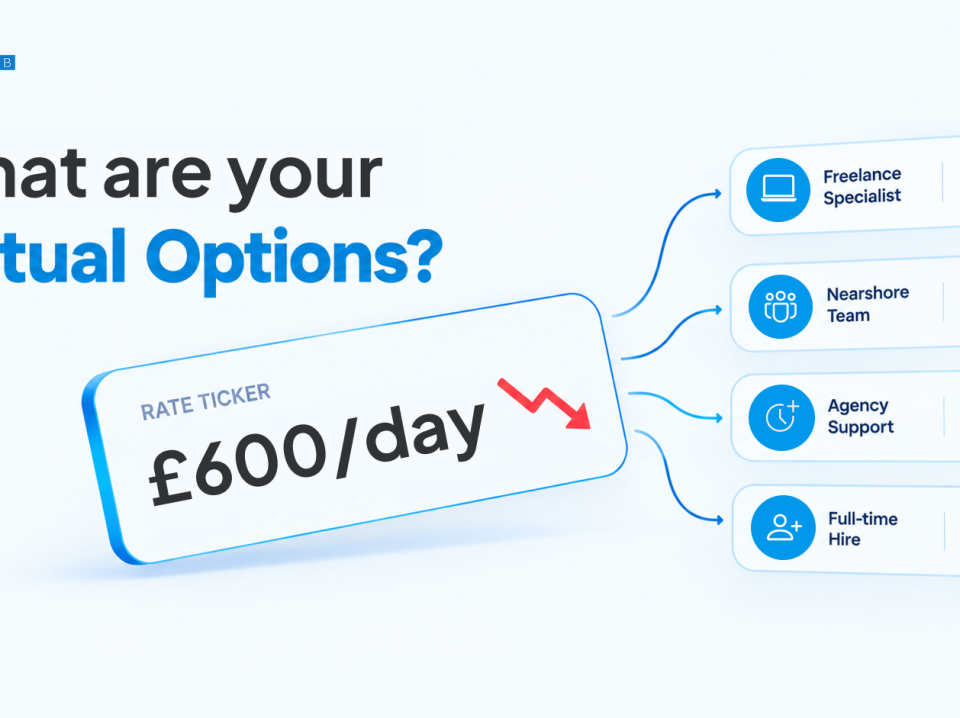
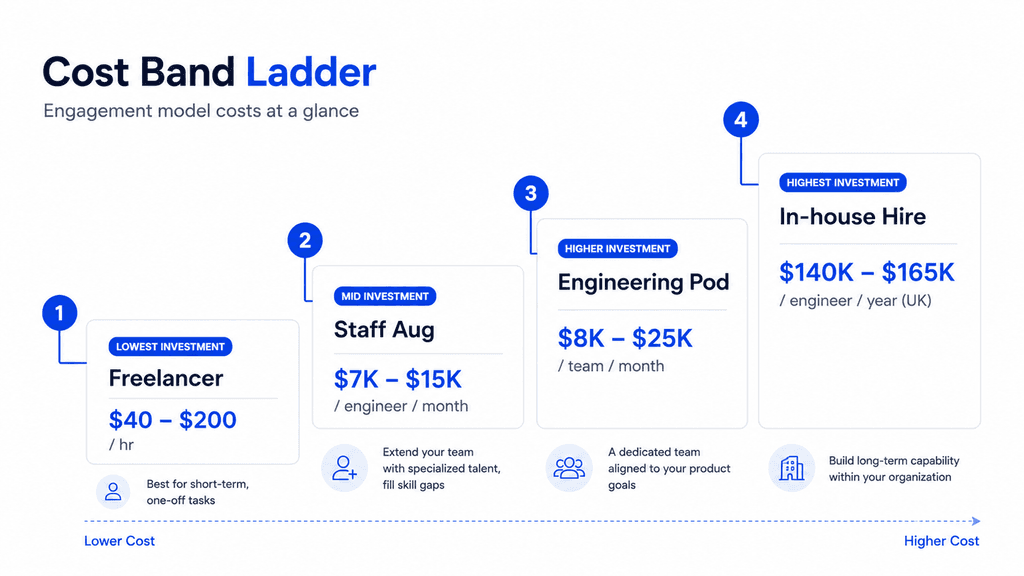
A freelancer is a single individual contractor, paid hourly or per-project. They work for multiple clients simultaneously, set their own hours, and use their own tools. Hourly rates in 2026 range from $40/hour for non-US/UK senior engineers to $200+/hour for top-tier specialists.
Staff augmentation places individual engineers inside your existing team structure, typically through an agency that handles HR, payroll, and bench risk. The engineer reports to your engineering manager day-to-day, attends your standups, and is functionally indistinguishable from a permanent employee — except you do not pay benefits, equity, or severance. Monthly cost per engineer: $7,000-$15,000 depending on seniority and geography.
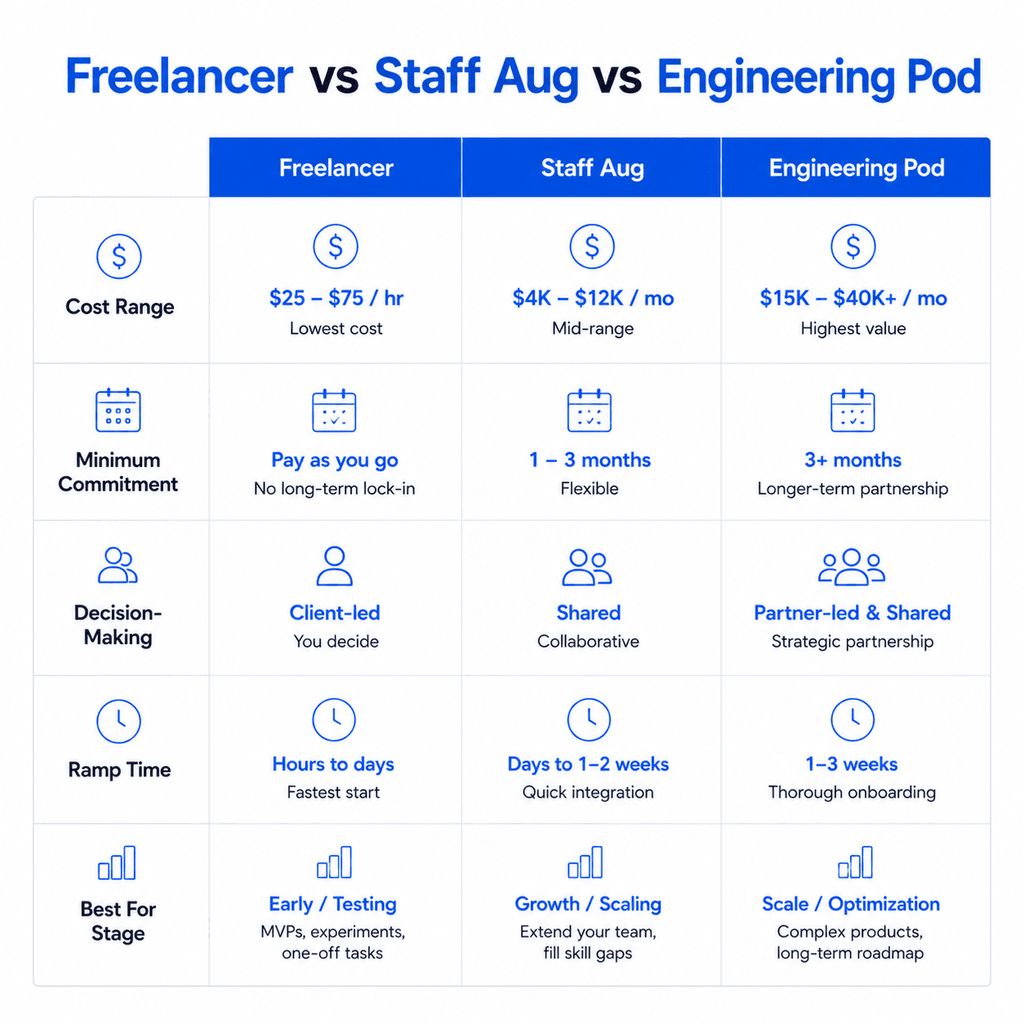
A dedicated pod team is a small group (typically 3-5 engineers plus a dedicated engagement lead) that operates as a self-contained unit. The pod has its own internal standups, its own architecture decisions within agreed boundaries, and reports outcomes to the client rather than tasks. The pod is hired as a unit and operates as a unit. Monthly cost: $8,000-$25,000 for the entire team depending on size and stack.
When Freelancers Are the Right Answer
Freelancers fit short, well-defined work. A 2-week feature build with clear acceptance criteria and no architectural ambiguity. A 1-month bug-fix engagement on a stable codebase. A specialist task a security audit, a performance investigation, a one-off integration where you need expertise for a fixed window.
Freelancers do not fit ongoing product development. The model breaks at coordination cost: managing 3 freelancers with overlapping work consumes more PM time than running one in-house team, and the freelancers themselves are often only available 50-70% of the hours you need them.
When Staff Augmentation Is the Right Answer
Staff augmentation fits when you have a strong existing engineering team, a clear architecture, and you simply need more hands. The engineer slots into your processes and accelerates work that is already structured. This is how Series B and later companies typically scale engineering capacity through Q1 hiring crunches. Companies that already have product-market fit often combine team extension strategies with long-term product engineering support to accelerate delivery without increasing hiring overhead.
Staff augmentation does not fit when your team is small (1-2 engineers) and you need someone to make architectural decisions, mentor juniors, or own a workstream end-to-end. Augmentation engineers execute well; they do not typically lead.
When an Engineering Pod Is the Right Answer
Pods fit funded startups in two specific situations. First, a pre-seed or seed founder who needs to ship a v1 in 8-12 weeks and has no engineering team to bolt augmentation onto. The pod is the engineering team. Second, a Series A company that needs to spin up a new product line or workstream as a self-contained effort and does not want to hire 4 engineers and a tech lead in 4 months locally.
Pods do not fit late-stage companies with strong engineering organizations and standardized processes. At that stage, augmentation is cheaper per hour and integrates more cleanly into your existing structure.
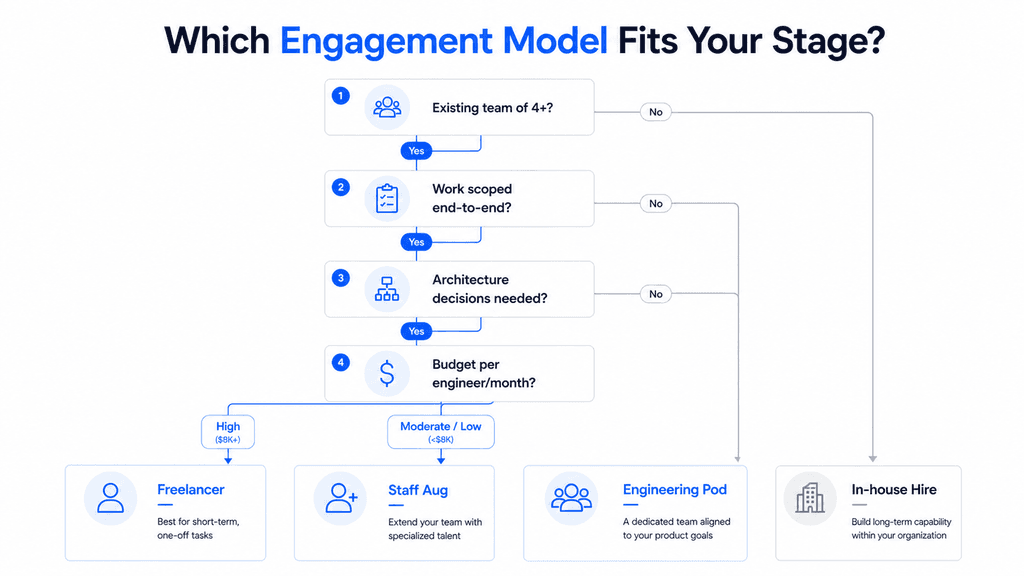
The Four-Question Stage Check
First: do you have an existing engineering team of 4 or more? If no, you need a pod or freelancers. If yes, augmentation is on the table. Second: is the work scoped end-to-end (a feature, a product, a workstream), or is it task-level? End-to-end: pod or in-house. Task-level: freelancer or augmentation. Third: do you need architectural decisions made by the team, or are they pre-decided? Decisions to make: pod. Decisions decided: augmentation. Fourth: what is your budget per engineer per month? Under $5K freelancers. $5K-$15K augmentation. $8K-$25K for a team pod.
Frequently Asked Questions
What does a SynthWeb engineering team include?? 3-5 engineers plus a dedicated engagement lead, plus part-time access to design, DevOps, and PM resources as needed. Monthly fixed price.
How long are pod engagements? Three-month minimum, with month-to-month renewal after that. Average engagement length is 8-14 months.
Can the team scale up or down mid-engagement?? Yes, with 2 weeks’ notice. We add or remove engineers at sprint boundaries.
What happens if a team member leaves?? Replacement onboarded with 1 week of overlap, paid by SynthWeb, not the client.
Conclusion
Choosing the right engineering engagement model depends on your startup’s stage team structure, and project requirements. Freelancers are best for short-term, specialized tasks, staff augmentation works well for established teams needing extra capacity, and engineering pods are ideal for companies that need a dedicated team to own and deliver outcomes.
The right model isn’t simply the cheapest option it’s the one that helps you move faster, reduce risk, and achieve your business goals more effectively.