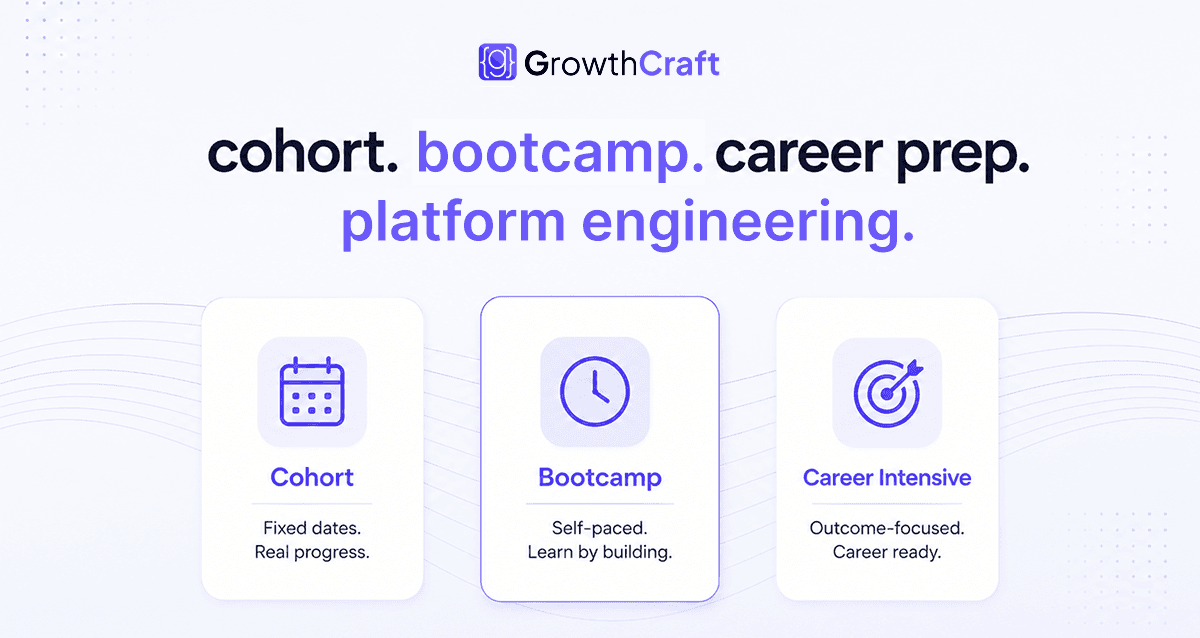
The Engineering Behind GrowthCraft is a flexible platform architecture designed to support cohort-based programmes, self-paced bootcamps, and career prep intensives within a single codebase. Most edtech platforms handle one programme type. A cohort-based course runs on a fixed schedule, a group of students move through content together, and everyone submits at the same time. This is the Coursera model, the Lambda School model, and the model that most LMS platforms are optimised for. GrowthCraft handles three programme types simultaneously in one codebase: cohort-based programmes, self-paced bootcamps, and career prep intensives. The engineering challenge is not building three separate learning flows — it is building one programme management engine flexible enough to handle all three without bespoke code for each.
Engineering Behind GrowthCraft: Programme Management
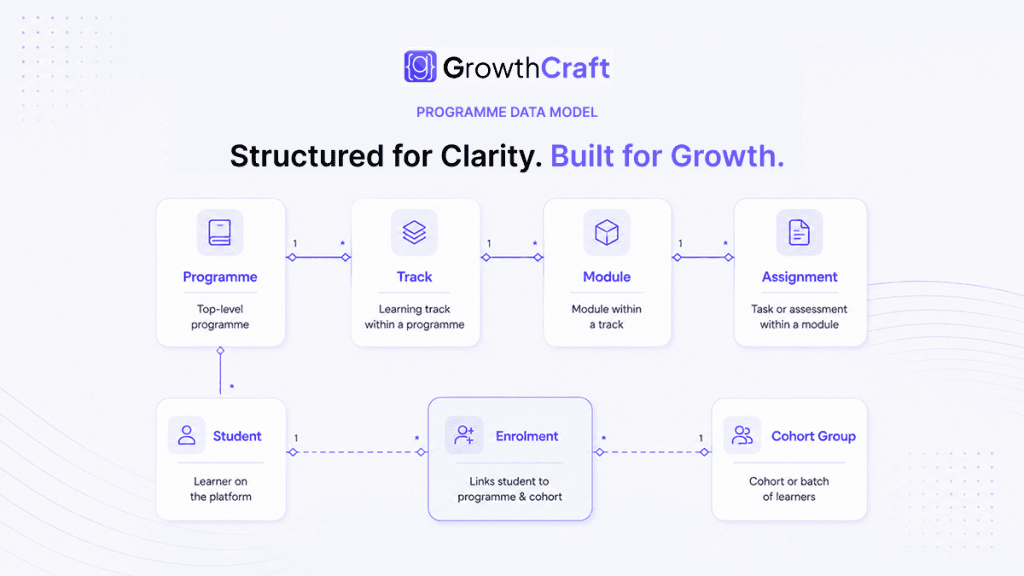
The key architectural decision was to abstract programme type as a configuration parameter rather than a structural difference in the data model. The core entities are: Programme (the container), Track (a sequence of learning modules), Module (a unit of content and project work), Assignment (a specific deliverable), and Enrolment (the relationship between a student, a programme, and optionally a cohort group).
The difference between a cohort programme and a self-paced bootcamp is in the Enrolment record: cohort enrolments reference a CohortGroup with a fixed start and end date; self-paced enrolments have no CohortGroup reference. The scheduling logic reads the Enrolment record and applies the appropriate rules. The UI components for students, mentors, and admins are the same in both cases — the scheduling information they display changes based on the enrolment type.
This approach means adding a fourth programme type in the future requires a new configuration option, not a new set of database tables, UI components, and business logic. It also means the mentor review queue works identically regardless of whether the student is in a cohort or working self-paced — the mentor does not need to know which programme type they are reviewing for.
The GitHub integration
The Engineering Behind GrowthCraft includes a GitHub-powered code submission workflow built on GitHub webhooks. When a student opens a pull request on their submission repository, a GitHub webhook fires to GrowthCraft’s backend. The backend validates the PR against the assignment specification, creates a review task in the mentor’s queue, and links the submission to the correct assignment record.
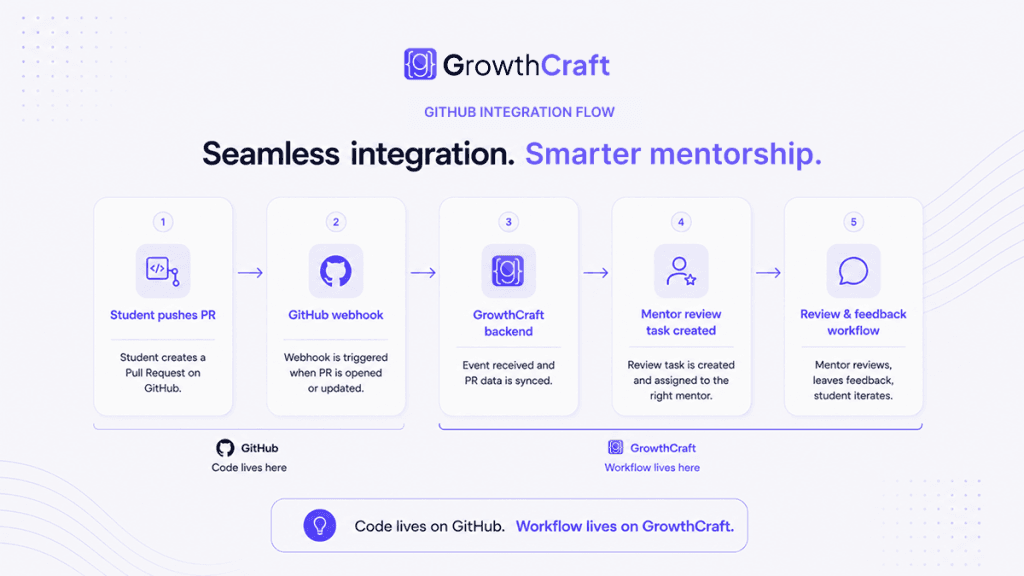
The code stays on GitHub. GrowthCraft handles the workflow and feedback. This is the correct design: students and companies both want the portfolio evidence to live on GitHub, where it is portable, shareable, and verifiable. GrowthCraft’s value is the structure around the code — the brief, the review, the feedback thread, the completion record — not the code itself.
The GitHub integration is implemented via GitHub Apps (not OAuth), which provides per-repository access with explicit permission grants from the student, and does not require the student to authorise access to their entire GitHub account.
Mentor allocation and workload management
GrowthCraft assigns mentors to cohorts based on track specialism and capacity. Each mentor has a configurable maximum review load — the number of active submissions they can have in their queue simultaneously. When a mentor’s queue is at capacity, new submissions in their assigned track are routed to the next available mentor with the same specialism.
The workload management system runs as a background job triggered every 30 minutes. It checks for submissions approaching the 48-hour SLA, identifies mentors with available capacity in the relevant track, and reassigns if the original mentor cannot respond in time. This logic has kept the platform’s average mentor response time under 18 hours across all cohorts to date.
Certificate generation
Programme completion triggers automated certificate generation. The certificate includes the student’s name, programme name, completion date, and a unique verification URL. The verification URL resolves to a public page on GrowthCraft showing the student’s completion record and a subset of their reviewed portfolio work.
The certificates are generated as PDFs using a server-side template, stored in S3, and emailed to the student. The verification URL is permanent and shareable — designed to be included in a CV or LinkedIn profile.
The Engineering Behind GrowthCraft demonstrates how one configurable platform can support multiple learning models without separate codebases.
FAQ
Is GrowthCraft open-source? Confirm with our Growth Executive on current status.
Can SynthWeb build a similar LMS for corporate training? Yes — the programme management engine, mentor review system, and GitHub integration transfer to corporate contexts. Organizations looking to validate a new learning platform can begin with an MVP Sprint before expanding into a full-scale implementation.
What makes GrowthCraft different from a traditional LMS? Project-based work, mentor review, and employer portfolio integration. Not content delivery — evidence production.