SOC 2 readiness startup Series A investors diligence is not about having full certification, it is about being on a credible path toward it. Series A investors do not expect a seed-stage startup to have SOC 2 Type II certification. What they do expect and increasingly ask for explicitly in due diligence is that you are on a credible path toward it. There is a meaningful difference between “we have SOC 2” and “we have the security fundamentals that make SOC 2 achievable.” The second answer is what investors want to hear at seed stage, and it is achievable at a reasonable cost.
Full SOC 2 Type II certification takes six to twelve months and costs $50,000 to $150,000 in audit fees, tooling, and internal time. This is a post-raise initiative, not a pre-raise one. The eight items below are what you build before raising the foundation that makes SOC 2 readiness achievable later and closes the security questions that appear in investor due diligence today.
SOC 2 Readiness Startup Series A: The 8 Items Investors Actually Check
1. Encryption at Rest and in Transit: SOC 2 Readiness Startup Series A Baseline
All production data encrypted at rest (AWS RDS encryption enabled, S3 bucket encryption enabled). All API traffic over HTTPS with valid TLS certificates. This is the baseline if you do not have this, every other answer is irrelevant.
2. Access Control with RBAC and Audit logging: SOC 2 Readiness Startup Series A Requirement
Role-based access control separating admin, operator, and read-only roles. Every permission-sensitive action logged with a timestamp, user ID, and action type. Audit logs stored separately from application logs and retained for a minimum of 90 days.
3. MFA on all Admin and Production Systems: SOC 2 Readiness Startup Series A Essential
Multi-factor authentication enabled on the AWS console, your code repository, your CI/CD pipeline, and any production database access. This is a one-day implementation and closes a major due diligence question.
4. Vulnerability Scanning(Dependabot or Snyk): SOC 2 Readiness Startup Series A Check
Automated scanning of dependencies on every code push. Critical vulnerabilities flagged in the PR before merge. A policy document stating your remediation SLA: critical vulnerabilities fixed within 24 hours, high within 7 days. This document takes two hours to write and signals operational maturity.
5. Incident Response Runbook: SOC 2 Readiness Startup Series A Document
A written document describing what happens when something goes wrong: who is contacted, in what order, what they do, and how you communicate with affected users. Two to three pages covering the most likely incident types is enough. Investors who ask for this rarely read it in full, the existence of the document is the signal.
6. Automated Database Backups: SOC 2 Readiness Startup Series A Foundation
Automated backups running on a documented schedule with a documented retention period. Critically: a test restore conducted and documented within the last 90 days. Most teams have backups. Very few have tested that the restore actually works. The test is what matters.
7. Employee Security Training with sign-off: SOC 2 Readiness Startup Series A People Control
Annual security awareness training with a written sign-off from every team member who has access to production systems. This can be a two-hour session and a one-page sign-off form. It satisfies the “people controls” element of the SOC 2 Trust Services Criteria.
8. Vendor Security Inventory Spreadsheet: SOC 2 Readiness Startup Series A Checklist
A list of every third-party tool that handles customer data: Stripe, Intercom, AWS, your analytics provider, your email provider. For each: what data they access, what their security posture is (SOC 2 certified? GDPR compliant?), and whether you have a DPA in place. This takes one afternoon to compile and surfaces data-handling issues before they surface in due diligence.
The Torus Evidence – Security as a Sales Asset
The audit log architecture on the Torus cyber insurance platform added 15 percent to the engineering effort on that engagement. Torus has used it in procurement conversations with three of their first 20 enterprise customers who asked to see the audit trail as part of their vendor security review. Security investment that closes enterprise deals is not compliance overhead. It is a sales asset.
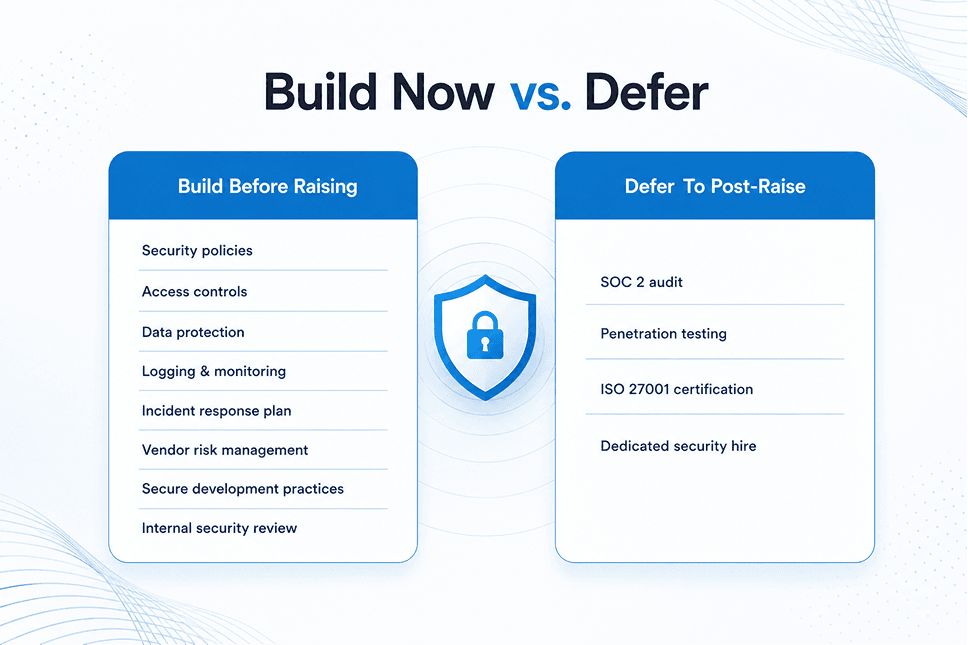
Build Now vs Defer to Post-Raise
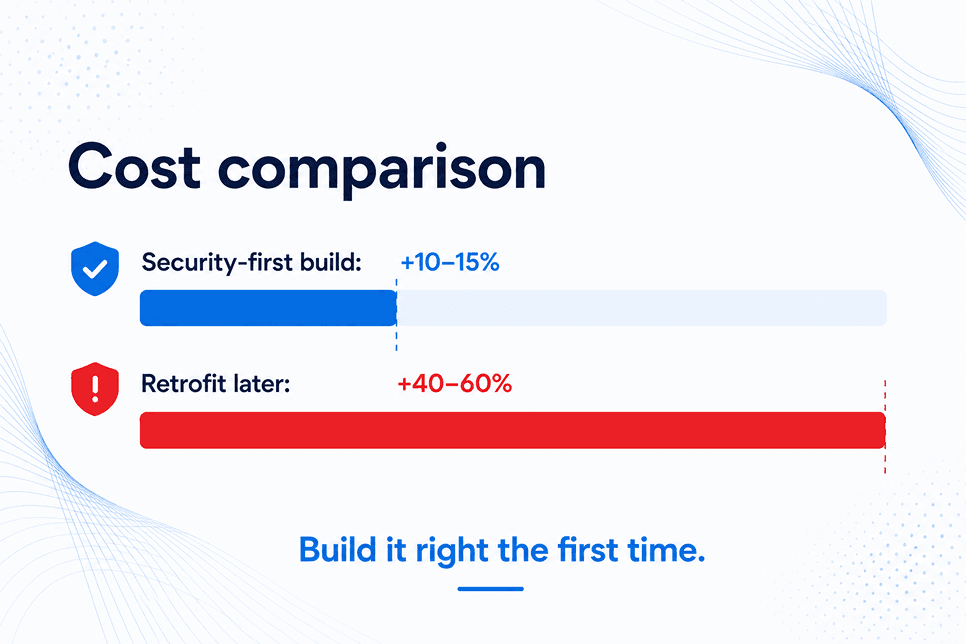
Build now (the 8 items above): $8,000 to $15,000 in engineering time across a focused sprint. Defer to post-raise: SOC 2 Type II audit ($50,000–$150,000), penetration test by external firm ($15,000–$40,000), ISO 27001 certification, dedicated security hire. The math on building security foundations before raising is straightforward, it costs 10 to 15 percent more during the build and eliminates 40 to 60 percent more in retrofitting cost after.
FAQ
Do we need SOC 2 before Series A?
No. You need the 8 foundations above. SOC 2 Type II is a post-raise project.
How much does full SOC 2 cost after raising?
$50,000 to $150,000 in audit fees and tooling, plus 2 to 3 months of engineering time for gap remediation.
Can SynthWeb build security-first from day one?
Yes, the SynthWeb Engineering Pod process includes all eight of the above as standard, built into the sprint from day one. You can also review our security approach for more detail on how we implement these foundations across every engagement.