A standard MVP Sprint runs around ten weeks. A fintech MVP with real compliance requirements KYC, AML screening, and data residency, rarely fits that same window. Fintech MVP timeline compliance needs to be considered from the beginning because these requirements introduce additional integration, workflow, and infrastructure work.
What adds time, and how much: fintech mvp timeline compliance
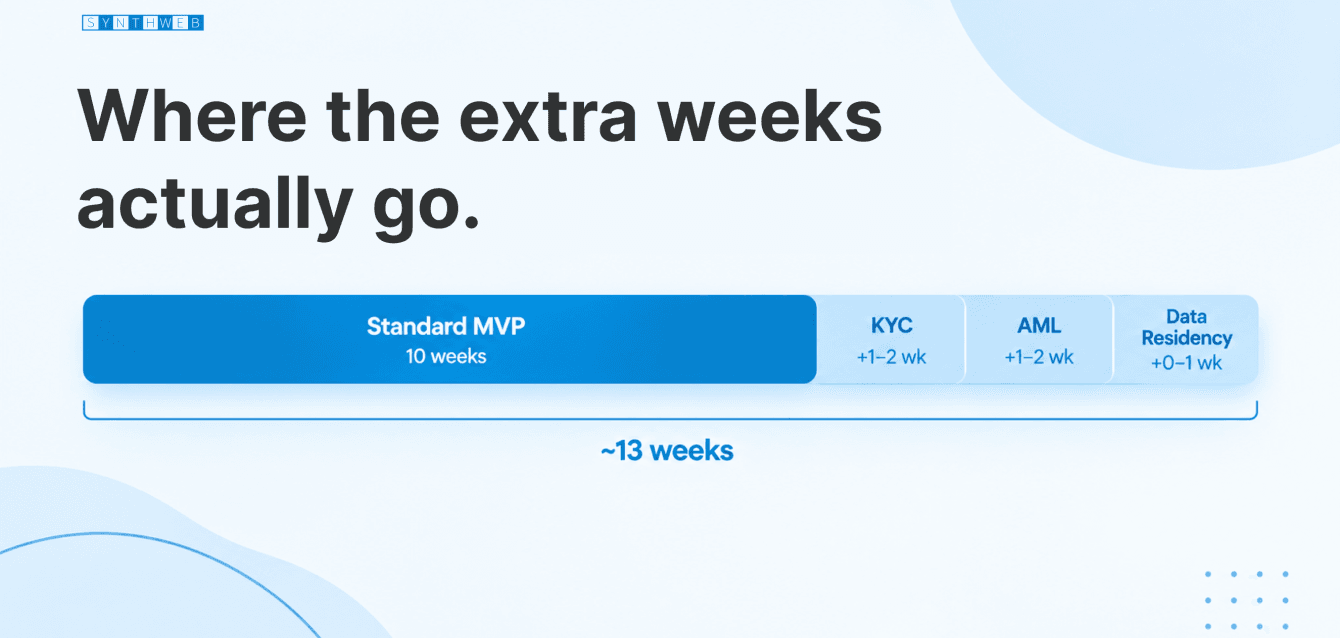
KYC and identity verification are usually the first areas that add development time. Connecting to an identity verification provider is only one part of the work. The MVP also needs to handle verification states, failed checks, retries, and manual-review flows. Depending on the provider and workflow, this typically adds one to two weeks.
AML transaction screening adds another layer when the product handles payments or transfers. The team needs to integrate the screening service and build the internal workflow for flagged users or transactions, including how those cases are recorded and reviewed. This generally adds another one to two weeks.
Data residency can affect the infrastructure setup. If the target market requires financial or customer data to remain within a specific region, the team needs to ensure the selected cloud services and storage support that requirement. Sometimes the impact is minimal. If it requires a different hosting architecture, it can add around another week.
These requirements are why fintech MVP timeline compliance should be included in the initial estimate rather than treated as work that can be added later.
What doesn’t need to be in the MVP
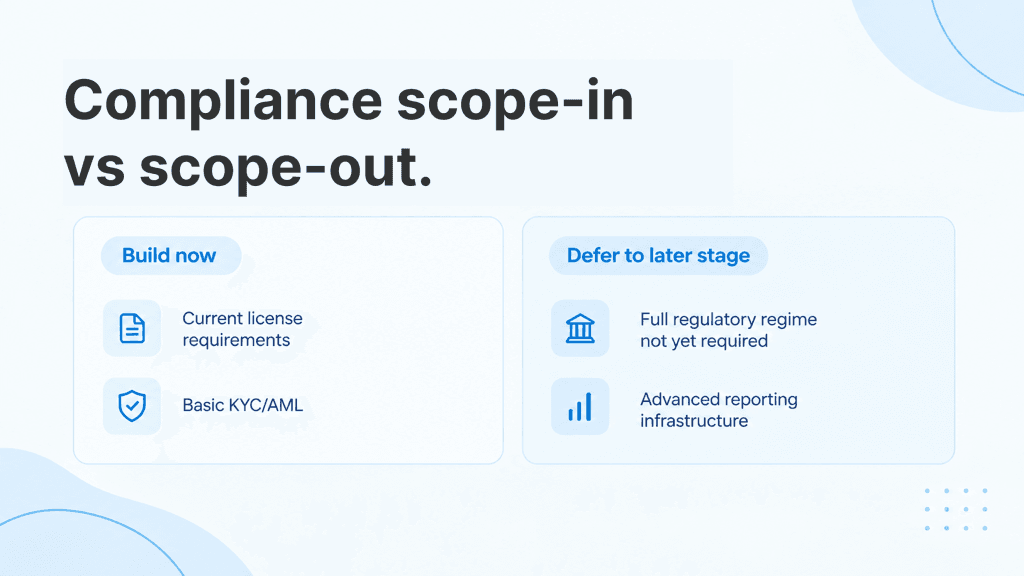
Compliance can also extend the timeline when the MVP is scoped around requirements that do not apply to the product at its current stage.
Founders may sometimes plan for a future regulatory setup before the product actually needs it. For example, a product operating under a specific license or regulatory sandbox may not need every control that could eventually be required under a full regulatory framework.
The goal should be to build the compliance requirements that apply to the product at launch. Future requirements can be addressed as the product expands into new markets, licenses, or regulatory environments.
This approach keeps fintech MVP timeline compliance connected to the actual scope of the MVP instead of adding infrastructure for requirements that are not yet necessary.
The realistic range
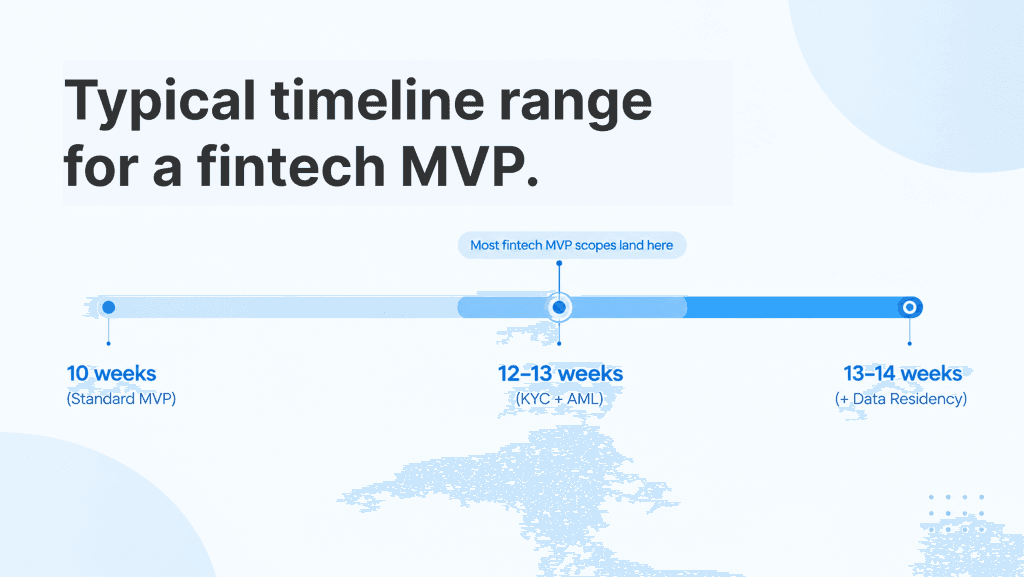
A standard MVP Sprint may take around 10 weeks. A fintech MVP that requires KYC and AML typically moves into the 12–13 week range. If a hard data residency requirement also affects the infrastructure architecture, the timeline can extend to approximately 13–14 weeks.
These are planning ranges, not fixed deadlines. The actual timeline depends on the providers, workflows, infrastructure, and regulatory requirements involved.
The important part is to account for compliance during scoping. A ten-week estimate that excludes KYC, AML, or infrastructure requirements can become inaccurate once those requirements enter development.
A realistic fintech MVP timeline compliance estimate gives founders a clearer picture of the build before development begins, rather than discovering the additional work halfway through the sprint.
FAQ
How long does a fintech MVP take compared to a standard MVP?
A standard MVP may take around ten weeks. A fintech MVP with KYC and AML typically takes around 12–13 weeks, while hard data residency requirements can push the timeline to approximately 13–14 weeks.
Which compliance requirements add the most time?
KYC and AML screening typically add one to two weeks each. Data residency varies depending on how much the required hosting architecture differs from the original setup.
Should a fintech MVP build for every future compliance requirement?
No. The initial build should cover the requirements that apply to the product at launch. Future requirements can be addressed as the product’s regulatory scope expands.
Also Read:
What We Ask Before Quoting a Compliance-Heavy Build: Fintech, Insurtech, and Healthtech Intake