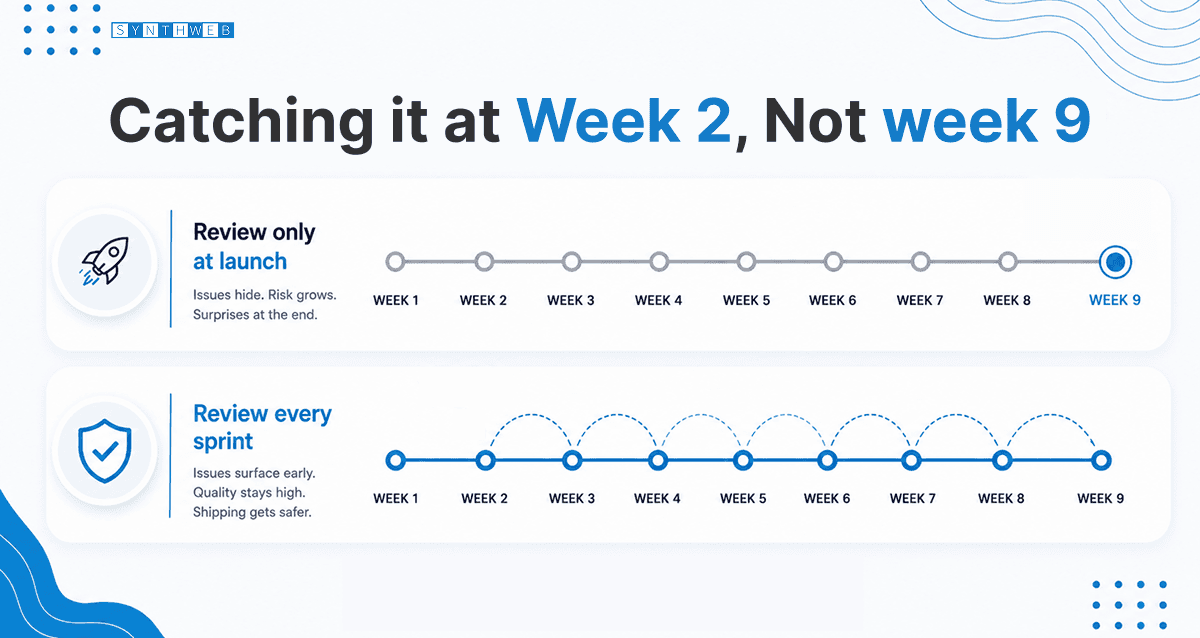
A single code review right before launch catches almost nothing that matters, because by then every architectural decision is load-bearing and every fix is a rewrite. We run code reviews inside every sprint instead, with findings visible to the client, not just internally. This code review process software agency approach gives clients visibility into code quality while there is still time to act on what the review finds.
Why Pre-Launch Review Is Too Late
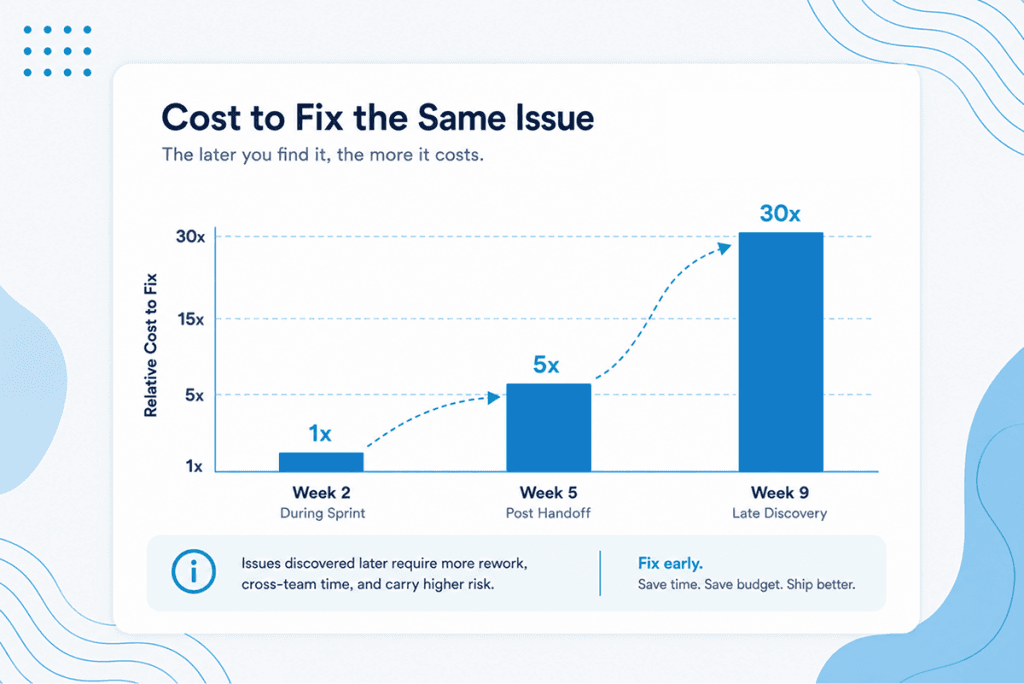
By the time a product is feature-complete, the codebase has already accumulated whatever patterns were established in week one. A reviewer at that stage can flag problems, but fixing a data model issue or an auth gap discovered in week nine means touching code that eight weeks of features have already been built on top of.
The review happens, the findings get written down, and most of them get deferred not because the team doesn’t care, but because fixing them properly at that point costs more than the timeline allows.
That is why a code review process software agency approach matters. Reviewing throughout the build means problems can be identified while the affected part of the codebase is still relatively small.
What a Per-Sprint Code Review Actually Catches
Reviewing at the end of every sprint while the surface area under review is still one or two weeks of work, means a data model issue gets caught while it’s still one feature deep, not eight. The same applies to other problems that become harder to address as more of the product is built around them.
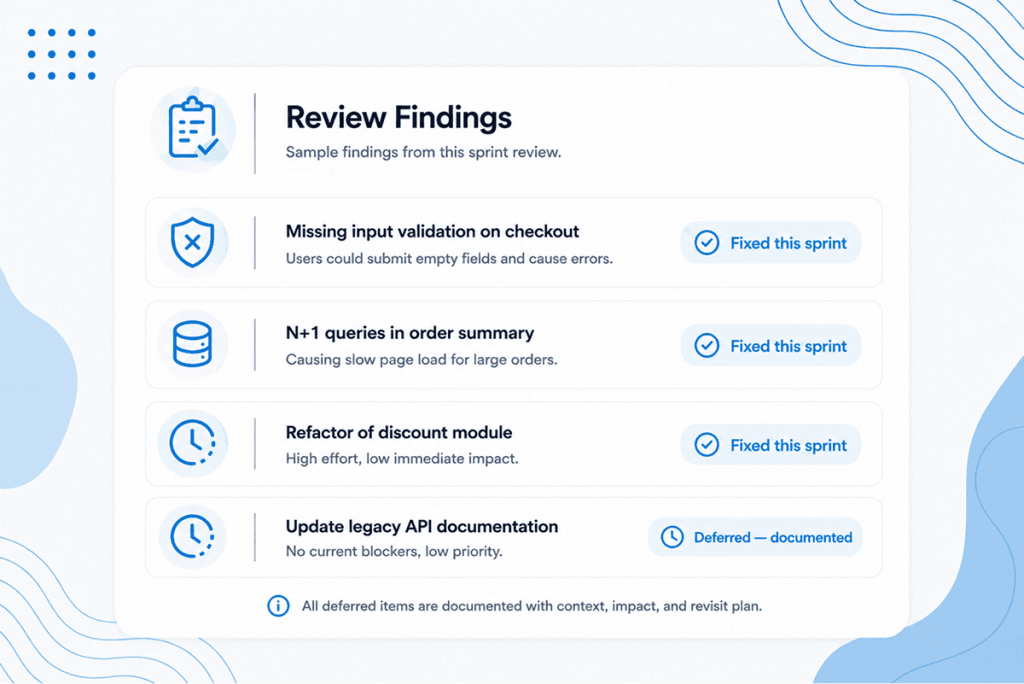
It also means the client sees the review, not just the summary of it: what was flagged, what got fixed immediately, and what was consciously deferred as acceptable technical debt for the timeline.
That distinction matters. Deferred debt is a conscious decision. Debt nobody noticed can become a much bigger problem later.
A code review process software agency workflow makes these decisions visible while the build is still in progress, rather than leaving code quality assessment until the product is ready to launch.
What This Changes About the Client Relationship
Visibility into code quality mid-build is one of the more concrete ways a non-technical founder can trust a build without being able to read the code themselves.
They can see that a review happened, see what it found, and see it get addressed in near-real-time rather than discovering issues in a report the week before launch, when there is no runway left to actually fix anything that matters. This also gives the client a clearer understanding of the decisions being made during development, rather than only seeing the finished result.
For the client, this creates a clearer view of how code quality is being managed throughout the engagement. For the engineering team, it means findings can be addressed while the relevant work is still fresh. It also keeps discussions around technical debt tied to specific findings and the timeline of the project, rather than leaving those decisions until the end.
The code review process software agency approach is ultimately about making code quality visible throughout the build, rather than treating it as a final checkpoint. Regular reviews make it possible to address relevant findings as the product takes shape, while also making it clear when an issue has been consciously deferred rather than overlooked.
FAQ
How often does SynthWeb run code reviews during a build?
Every sprint, typically weekly or biweekly depending on the engagement, rather than a single review before launch.
Can clients see the results of code reviews?
Yes, findings are shared with the client, including what was fixed immediately and what was consciously deferred, not just an internal summary.
Why is a pre-launch-only code review not enough?
By feature-complete stage, architectural patterns are already load-bearing across the whole codebase, so fixes discovered late cost far more and are more likely to be deferred rather than actually fixed.
Also Read:
SOC 2 Readiness Startup Series A: 8 Critical Security Checks Investors Always Demand
.