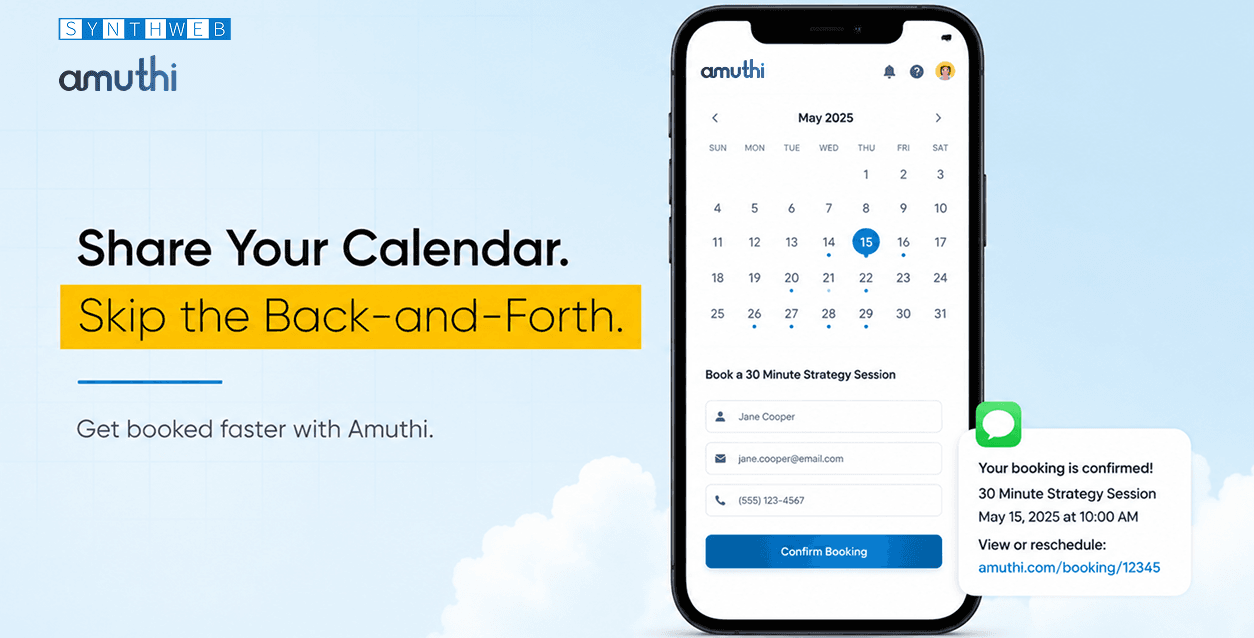
Booking flow design for service professionals begins long before someone reaches a booking page. Amuthi’s booking flow starts in someone else’s app. A potential client is browsing a photographer’s Instagram, sees a post they like, taps the bio link, and lands on the booking page. They are still inside Instagram’s in-app browser. They are on a phone. They are at the moment of maximum intent—and the next 60 seconds will determine whether they book or close the tab.
This context, mobile-first, in-app browser, and moment-of-intent; drove every booking flow decision we made on Amuthi. This post explores the five UX decisions that improved conversions and the two that taught us valuable lessons.
The 5 decisions that reduced abandonment
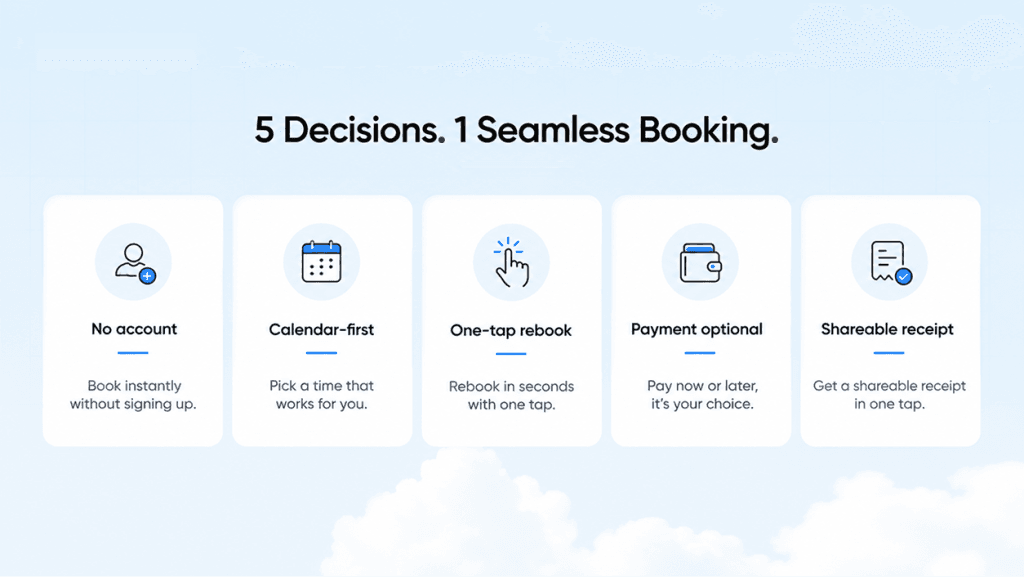
No account required.
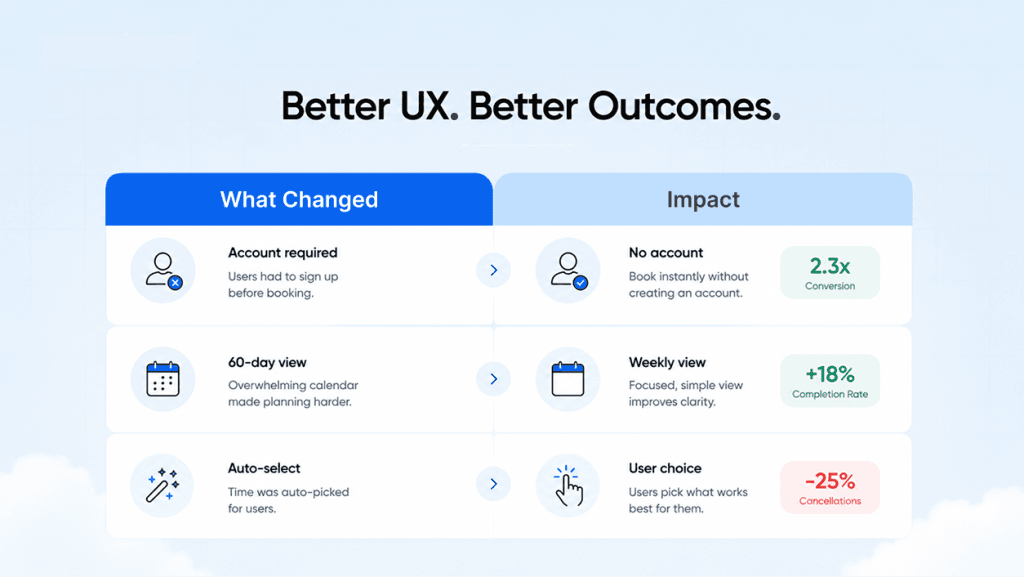
The original booking flow required creating an account. Version one with account creation converted at roughly half the rate of the accountless version we shipped in week eight. This reflects findings from Baymard Institute’s checkout usability research, which shows that mandatory account creation is a common source of checkout abandonment.The revised flow asks for four things: name, phone number, session date preference, and a one-line note. Confirmation arrives via SMS. The professional has everything they need; the client has not surrendered a password to a service they have used once.
Calendar-first UX.
The intuitive sequence is: tell us what you want, then see when we are available. The Amuthi sequence is the reverse: see when we are available, then tell us what you want. This approach became a core part of our booking flow design for service professionals after we identified a specific drop-off pattern in version one. Users who filled in their preferences and then discovered no availability on their desired dates felt misled, even though no deception had occurred. They had invested four minutes only to receive a “no.” A calendar-first approach eliminates this frustration entirely. If there is no availability on your preferred date, you know within 15 seconds.
One-tap rebooking for returning clients.
A returning client’s previous booking pre-fills the form. The only required action is confirming or changing the date. This reduced repeat booking friction by approximately 40 percent and is now Amuthi’s highest-converting flow.
Payment configuration per professional.
Photographers typically require a deposit at the time of booking to reduce no-shows — a £50 deposit on a £300 session brings no-show rates down by approximately 70 percent based on Amuthi’s data. Makeup artists working on shorter-notice, lower-ticket sessions often prefer pay-in-person. Amuthi lets each professional configure their payment requirement. A booking platform that forces one payment model on both use cases loses one of them.
Booking confirmation as shareable receipt.
The confirmation screen includes an “Add to Calendar” link and a shareable booking receipt. Professionals who asked clients to screenshot and share their booking confirmation generated measurable organic reach — a client sharing “booked my shoot with [photographer]” is a referral, not an afterthought.
The 2 things we got wrong and fixed
60-day calendar view.
Version one showed 60 days of availability in a grid. Users consistently scrolled past the first two weeks looking for something—we could not identify what. Completion rate on multi-scroll sessions was 18 percent lower than on single-scroll sessions. We redesigned the interface to show one week at a time with a “Show more dates” control. Completion rate improved by 18 percent, reinforcing an important principle of booking flow design for service professionals: too much choice on a mobile screen creates paralysis, not convenience
Auto-selecting the first available slot.
We thought pre-selecting the nearest available slot was helpful — it reduced the number of taps required. It turned out to feel pushy. Users who encountered a pre-selected slot cancelled at 25 percent higher rates than users who chose their own slot. Removing auto-selection lowered cancellations without increasing drop-off. Choice matters, even when the choice is obvious.
The Platform Reality Behind Booking Flow Design for Service Professionals
The booking flow is built in React, mobile-first, and optimised specifically for in-app browsers—an essential consideration in booking flow design for service professionals. Instagram, WhatsApp, and TikTok in-app browsers have narrower viewports, different scroll behaviour, and occasional rendering quirks that standard mobile browsers do not. We test every booking flow change across all three in-app browser environments before shipping to ensure a consistent user experience. Similar mobile-first scheduling principles are reflected in the Cal.com booking documentation, which emphasises flexible and reliable booking experiences across devices.
FAQ
Can Amuthi’s booking flow be customised for other service industries?
Yes — the flow is configurable per professional. Personal trainers, stylists, tutors, and therapists all use slightly different configurations of the same system.
How long did the booking flow take to build?
Three weeks as part of the 12-week Amuthi build. Iteration from version one to the current version took four additional sprints post-launch.
What was the biggest single improvement to conversion?
Removing the account requirement. The second biggest was calendar-first sequencing.
Also Read:
Inside Amuthi: Why We Built Booking, CRM, and Links as One Platform Instead of Three Tools