AI Energy Consumption: 7 Shocking Trends Defining the 2026 Power Crisis
In the first few seconds of 2026, millions of users worldwide began their day by asking an LLM to draft an email or generate an image. But behind every digital “thought” lies a physical cost. AI energy consumption has moved from a niche technical concern to a global infrastructure emergency.
Recent data from the International Energy Agency (IEA) indicates that by the end of 2026, global electricity demand from data centers will exceed 1,000 TWh. This surge, largely driven by artificial intelligence energy requirements, is forcing a massive reckoning in how we build and power our digital world.
The Hidden Reality of AI Power Consumption
When we ask, “How much energy does artificial intelligence use?“ the answer is often surprising. A single query on a generative AI platform uses approximately 2.9 Wh of electricity—nearly ten times the energy of a standard Google search. As enterprises scale their AI power consumption, the cumulative effect is straining local power grids from Virginia to Ireland.
Why is AI Energy Demand Growing So Fast?
The primary driver of AI energy demand in 2026 is the transition from model training to massive-scale inference. While training a model like GPT-4 required an estimated 50 GWh, the ongoing daily use by hundreds of millions of people creates a “perpetual peak” in electricity usage. This has led to the rise of Energy and AI management software designed to prevent grid blackouts during peak hours.
Analyzing the AI Environmental Impact
The AI environmental impact extends far beyond the electricity meter. To truly understand if is AI environment friendly, we must look at the “triple bottom line” of carbon, cooling, and hardware waste.
The Crisis of AI Water Usage
Does AI use water? Yes, and the scale is staggering. High-performance GPUs generate immense heat, requiring sophisticated cooling. AI water usage has become a flashpoint for local communities, as data centers can consume up to 5 million gallons of water daily.
- The Reality: Every 20–50 prompts essentially “consumes” a 500ml bottle of fresh water for cooling.
- The Solution: Many companies are now moving toward “closed-loop” cooling or subsea data centers to mitigate this.
Is AI and Sustainability a Contradiction?
The relationship between AI and sustainability is a paradox. While the models consume resources, they are also used to discover new materials for batteries and optimize renewable energy grids. Achieving Sustainable AI requires a holistic approach, starting with the hardware and ending with the code.
Moving Toward Green AI: 2026 Best Practices
To counter the high AI energy consumption, the industry is adopting “Green” standards. The Green AI Institute has become the leading authority in certifying models that prioritize efficiency over brute-force parameters.
1. Utilizing the Green AI Cloud
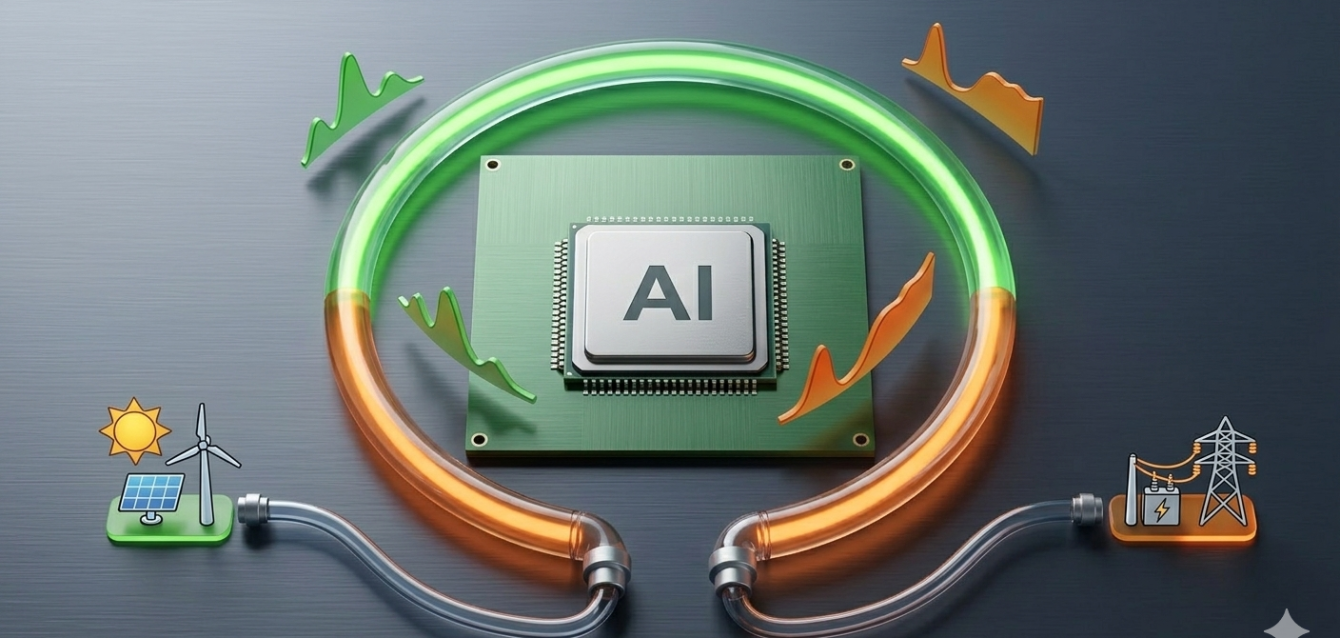
A Green AI Cloud provider ensures that your workloads are carbon-neutral by using “Carbon-Aware” scheduling. This means the cloud provider automatically shifts non-urgent processing to times when renewal energy and AI infrastructure (like wind or solar) is at its peak output.
2. Selecting the Most Environmentally Friendly AI
Not all models are created equal. The most environmentally friendly AI is often a smaller, “quantized” model tailored for a specific task rather than a massive general-purpose LLM. By “right-sizing” your AI deployment, you can reduce your AI power consumption by up to 70%.
FAQ: What You Need to Know About AI Energy Consumption
How much energy does artificial intelligence use daily?
In 2026, AI-related tasks are projected to consume as much power as a mid-sized European country. This includes the electricity for the chips and the cooling systems required to keep them operational.
How can I make my AI more sustainable?
Focus on Sustainable AI practices such as using pre-trained models, optimizing your code for Green AI standards, and hosting your data in regions with high access to renewal energy and AI grid connections.
Is AI environment friendly in the long run?
While the current environmental impact of AI is high, the long-term goal is “Net Zero.” Through the efforts of the Green AI Institute, we are seeing a shift toward hardware that delivers more “intelligence per watt.”
Conclusion: Balancing Innovation and the Planet
As we look at the trajectory of AI energy consumption in 2026, it is clear that we cannot have a digital revolution without a green revolution. From managing AI water usage to investing in Sustainable AI, the tech industry must take responsibility for its footprint.
For more information on reducing your data center’s footprint, check out the latest reports from the Green AI Institute or explore our internal guide on Cloud Infrastructure Optimization.